
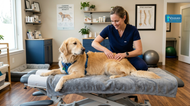
What Does a Canine Chiropractor Do? Signs Your Dog May Benefit From Chiropractic Care
Posted by Volhard Dog Nutrition on Jul 2nd 2026
Dogs are naturally active, curious, and eager!
Whether they're chasing a ball in the park or navigating an agility course, healthy movement plays an important role in their quality of life.
A dog chiropractor focuses on evaluating movement, mobility, and spinal function to help support the body's natural ability to move comfortably and efficiently.
Chiropractic care can be part of a comprehensive wellness plan designed to help dogs stay active and enjoy life to the fullest.
How Chiropractic Care Works for Dogs
Canine chiropractic care focuses on the relationship between the spine, nervous system, and overall movement.
Through gentle, targeted adjustments, a trained animal chiropractor works to restore proper motion to joints that may not be moving as they should.
During an episode of the Volhard Pack Podcast, Dr. Melissa Shaw, a certified animal chiropractor and founder of Coastal Canines Animal Chiropractic & Bodywork, explained that chiropractic care works alongside veterinary care and other therapies to support a dog's health and mobility.
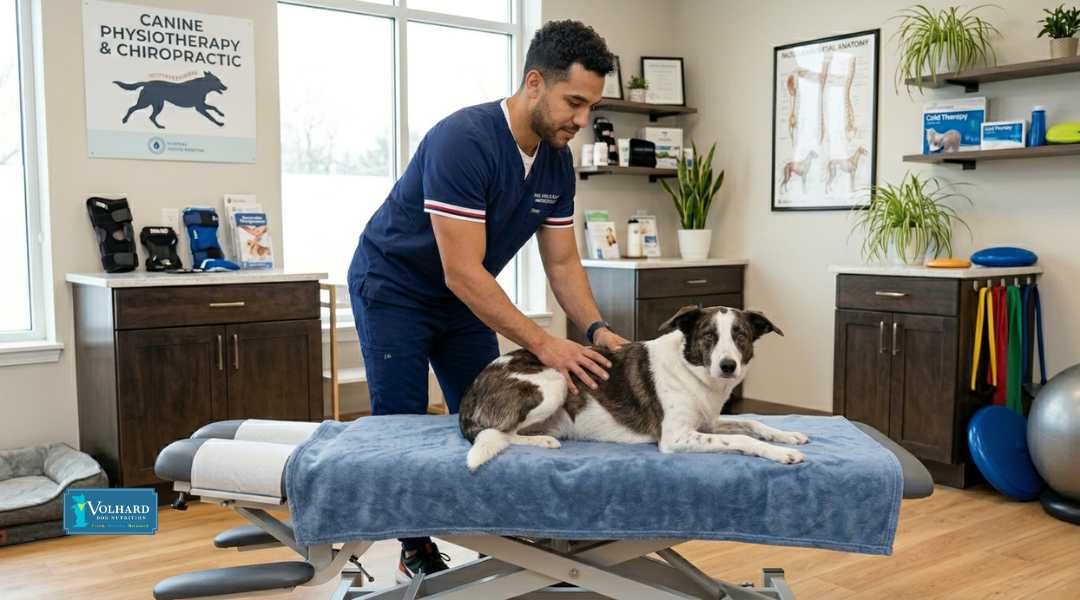
The Connection Between the Spine, Nervous System, and Movement
The nervous system plays a role in every function of the body. The brain, spinal cord, and nerves work together to coordinate movement, muscle function, balance, and communication throughout the body.
As Dr. Shaw shared, the nervous system acts as the body's communication network.
When movement restrictions develop within the spine or joints, that communication may be affected. These restrictions can contribute to changes in posture, mobility, coordination, and overall comfort.
Because the nervous system influences muscles, joints, and many other bodily functions, supporting proper spinal movement may help dogs move more freely and efficiently.
This is one reason chiropractic care is often used as part of a broader approach to maintaining mobility and supporting recovery.
Identifying and addressing these changes early can help support a dog's long-term quality of life.
Chiropractic Care as Part of a Comprehensive Wellness Plan
The most effective approach to supporting a dog's health often involves combining multiple strategies to address concerns.
Chiropractors frequently collaborate with veterinarians and other professionals to ensure dogs receive well-rounded care.

Signs Your Dog May Benefit From Chiropractic Care
Dogs are remarkably resilient and often continue their daily routines even when they're uncomfortable.
Because they can't tell us when something feels off, it's important to pay attention to subtle changes in how they move, play, and interact with their environment.
Many dogs are referred for chiropractic care after owners notice changes in mobility, posture, or performance that cannot be explained by a specific injury. In some cases, these changes develop gradually over time, making them easy to overlook.
Difficulty Getting Up, Lying Down, or Jumping
Has your dog started hesitating before jumping onto the couch or into the car? Do they take longer or struggle to rise after resting or lying down?
These changes can sometimes suggest discomfort or reduced mobility affecting the joints, muscles, or spine.
While occasional stiffness may occur after strenuous activity, persistent difficulty with everyday movements warrants attention.
Limping, Favoring a Leg, or Changes in Gait
Changes in the way your dog walks can provide valuable clues about their physical wellbeing.
Limping, hopping, shortening their stride, dragging a paw, or shifting weight away from one limb can all indicate an underlying issue.
On the Volhard Pack Podcast, Dr. Shaw shared a case involving a young dog with unexplained limb swelling, knuckling, paw dragging, and mobility challenges.
Through collaborative care involving veterinary guidance and chiropractic treatment, the dog's mobility improved significantly over time.
Not every gait change requires chiropractic care, but any persistent limping or altered movement pattern should be evaluated by a veterinarian.
Once medical concerns have been identified, chiropractic care may become part of a broader support plan.
Reduced Performance in Active or Sporting Dogs
Athletic dogs place significant demands on their bodies. Whether they compete in agility, obedience, field work, flyball, dock diving, hunting, or other canine sports, optimal movement is essential for performance and injury prevention.
Dog chiropractors regularly work with sporting and performance dogs, including many involved in American Kennel Club events.
For these highly active dogs, maintaining proper mobility and movement patterns can be an important part of supporting long-term performance and comfort.
Stiffness, Discomfort, or Reluctance to Exercise
Senior dogs naturally experience physical changes, but many can remain active and comfortable with the right support.
When stiffness or discomfort begins affecting your dog's daily life, it may be worth discussing mobility-focused therapies with your veterinarian.
Chiropractic care is one option that may help support movement and overall quality of life when incorporated into a comprehensive wellness plan.

Why Combining Nutrition and Chiropractic Care Works
Nutrition is another important piece of the wellness puzzle.
A dog's muscles, joints, connective tissues, and immune system all rely on proper nutrition to function optimally.
Even the best treatment plan can be limited if the body lacks the nutrients needed to support recovery, maintenance, and healthy movement.
Mobility, recovery, comfort, and overall vitality are influenced by many factors, including movement, nervous system function, muscle strength, body condition, and nutrition.
Nutrition provides the building blocks the body needs to maintain healthy tissues, support recovery, and fuel daily activity.
When these two approaches are combined, they can complement one another. Chiropractic care helps support how the body functions, while proper nutrition helps support what the body is built from. Together, they create a stronger foundation for long-term health, mobility, and quality of life.
Proper Nutrition Supports Joint and Muscle Health
Protein provides the amino acids needed to maintain and repair muscle tissue, while essential fatty acids help support normal inflammatory responses and overall joint health.
Vitamins, minerals, and other nutrients contribute to bone strength, connective tissue integrity, and cellular function.
Whether your dog is a growing puppy, an active competitor, or a senior companion, a nutrient-dense diet helps support the structures responsible for healthy movement.
Whole-Food Nutrition in Recovery and Mobility
Rather than focusing on a single ingredient or supplement, a balanced whole-food approach helps nourish the body as a complete system.
At Volhard Dog Nutrition, we believe that nutrition is one of the most powerful tools available for supporting lifelong wellness.
By supporting both the body's structure and its nutritional needs, pet owners can take a more comprehensive approach to helping their dogs move comfortably and thrive.

Support Your Dog's Mobility from the Inside Out with Volhard!
For more advice on dog nutrition, health, and training, contact us and check out our other blogs, too!
Volhard Dog Nutrition and its expert canine nutrition coaches offer online consultations to help more dog parents discover why and how to feed their dogs the healthiest foods!
Speaking to a Volhard canine nutrition coach will help you understand the inseparable relationship between healthy food, a healthy body, and a healthy mind.
If you want to contact one of our Volhard canine nutrition coaches, you can do so by utilizing our Live Chat feature or scheduling a consultation.
References:
American Animal Hospital Association. (2020). What is veterinary physical rehabilitation? American Animal Hospital Association. From https://www.aaha.org/resources/what-is-veterinary-physical-rehabilitation/
Mille, M. A., Bockstahler, B. A., Skalicky, M., & Wittek, K. (2023). Physiotherapeutic strategies and their current evidence for canine osteoarthritis. Veterinary Sciences, 10(1), 36. https://doi.org/10.3390/vetsci10010036
Purdue University College of Veterinary Medicine. (n.d.). Physical rehabilitation. Purdue University Veterinary Hospital. From https://vet.purdue.edu/hospital/small-animal/services/physical-rehabilitation.php
Shmalberg, J. (2015, July/August). Canine rehabilitative nutrition. Today's Veterinary Practice.https://todaysveterinarypractice.com/nutrition/canine-performance-rehabilitative-nutrition-part-2-canine-rehabilitative-nutrition/
Volhard Dog Nutrition. (2026). Volhard Pack Podcast: Dr. Melissa Shaw [Audio podcast episode]. Spotify. https://open.spotify.com/episode/0DfYba4YjI2G4UhFyBRUtd
World Small Animal Veterinary Association. (n.d.). Global nutrition guidelines. World Small Animal Veterinary Association. From https://wsava.org/global-guidelines/global-nutrition-guidelines/