

Can Dogs Eat Cooked Bacon
Posted by Volhard Dog Nutrition on Aug 6th 2026
Few foods are as tempting to dogs as bacon. Whether it's the smell coming from the frying pan or a piece dropped at the breakfast table, many owners wonder if sharing a bite is harmless.
While a small piece of cooked bacon is unlikely to be dangerous for most healthy dogs, that doesn't necessarily mean it's a good addition to their diet.
Understanding the difference between an occasional treat and a nutritionally beneficial food can help you make better decisions about what goes into your dog's bowl.
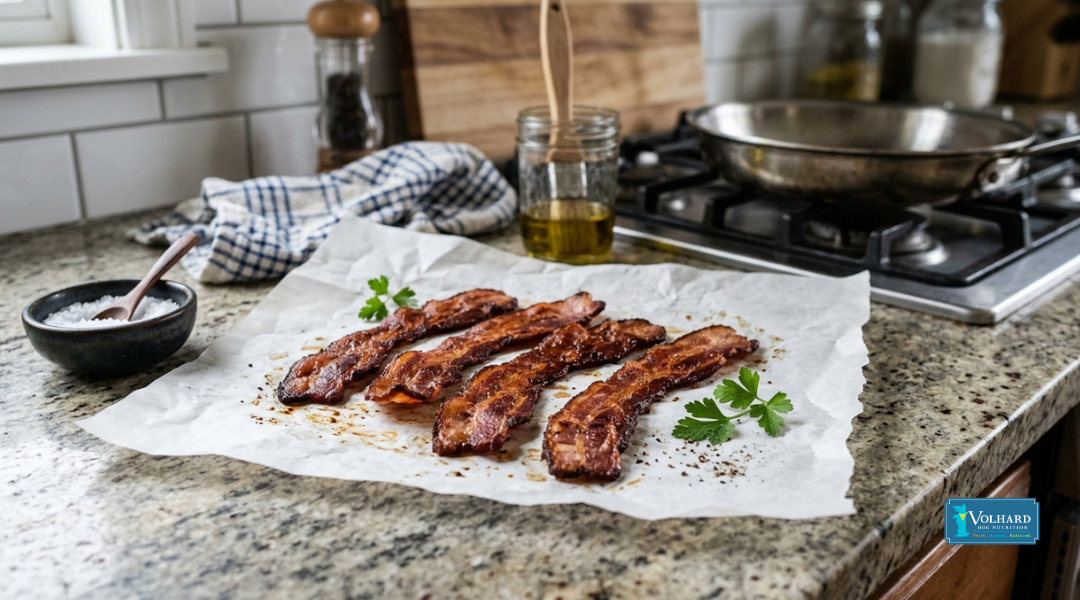
Is Cooked Bacon Safe for Dogs?
Small pieces of cooked bacon are unlikely to harm a healthy dog, but it is not a food that should be fed regularly.
Bacon is high in fat, sodium, and calories, and most varieties are heavily processed before they ever reach the frying pan. While many dogs will happily eat it, that doesn't make it a healthy choice.
If you're looking to include pork in your dog's diet, there are better options than traditionally cooked bacon.
The Problem With Rendered Fat
One of the biggest concerns with cooked bacon is rendered fat. As bacon cooks, much of its fat melts and changes composition, leaving behind a greasy, concentrated fat that can be difficult to digest.
Rendered fat adds unnecessary calories to the diet and may contribute to gut dysbiosis or weight gain, particularly if a dog isn't used to eating fatty foods.
For dogs eating fresh diets, whole, natural fat sources are generally preferred over rendered fats produced during cooking.
Bacon and the Risk of Pancreatitis
One of the biggest health concerns associated with feeding bacon regularly is the increased risk of pancreatitis.
Pancreatitis is an inflammation of the pancreas that can develop after dogs consume high-fat foods, particularly if they eat them frequently or in large amounts.
Dogs with a history of pancreatitis, obesity, digestive disorders, or breeds that are predisposed to the condition are especially vulnerable.
Signs of pancreatitis can include vomiting, diarrhea, loss of appetite, abdominal pain, lethargy, and dehydration.
Healthier, leaner treats are a much safer option for supporting your dog's long-term health.
Salt, Seasonings, and Preservatives
Most bacon contains far more than just pork. Commercial bacon is typically cured with salt and may also include sugar, nitrates, nitrites, smoke flavoring, spices, and other preservatives.
While small amounts are unlikely to cause problems for most healthy dogs, these ingredients offer no nutritional benefit and make bacon a less desirable choice in a well-rounded diet.
Flavored bacon products, such as maple, honey-glazed, peppered, or garlic-seasoned varieties, should be avoided.
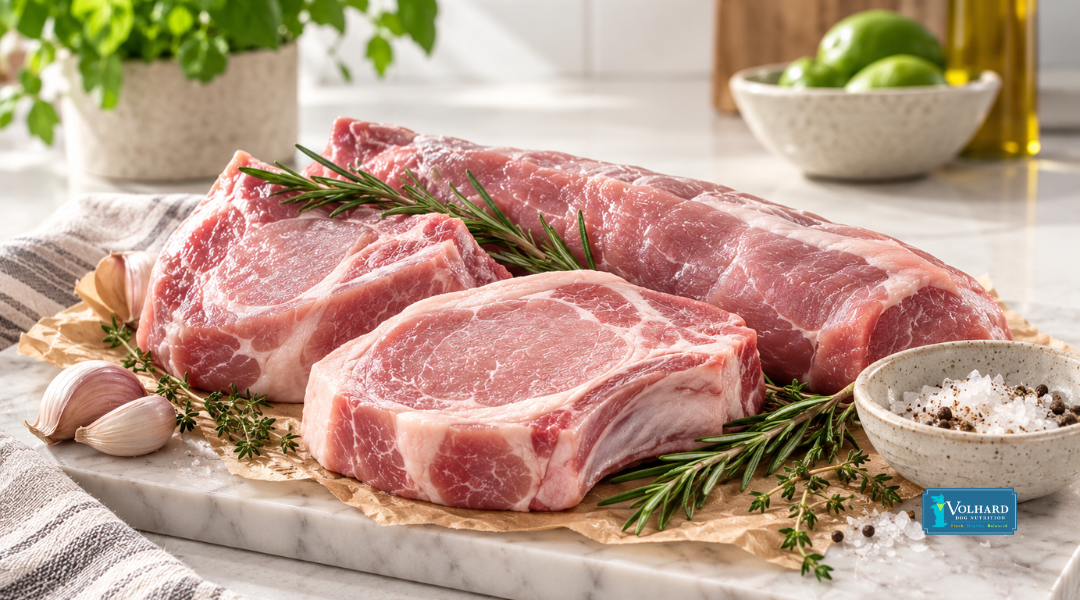
Are There Better Ways to Feed Pork?
Pork can be a nutritious source of protein for dogs when it is prepared properly and included in a balanced diet.
Rather than relying on processed foods like bacon, it's better to choose fresh pork, which provides protein and natural fats without excessive salt, preservatives, or other unnecessary additives.
The quality of the ingredient is just as important as the way it is prepared. Feeding minimally processed foods allows your dog to benefit from the nutrients found in whole ingredients while avoiding many of the drawbacks associated with processed meats.
Lightly Cooked or Raw Pork May Be a Better Option
If you would like to feed pork, lightly cooked pork or appropriately sourced raw pork are generally better choices than traditionally cooked bacon.
When feeding raw pork, it should always come from a trusted source and be included as part of a complete and balanced fresh feeding plan.
Likewise, lightly cooking pork while avoiding heavy frying can help preserve the meat's quality without producing the large amounts of rendered fat found in crispy bacon.
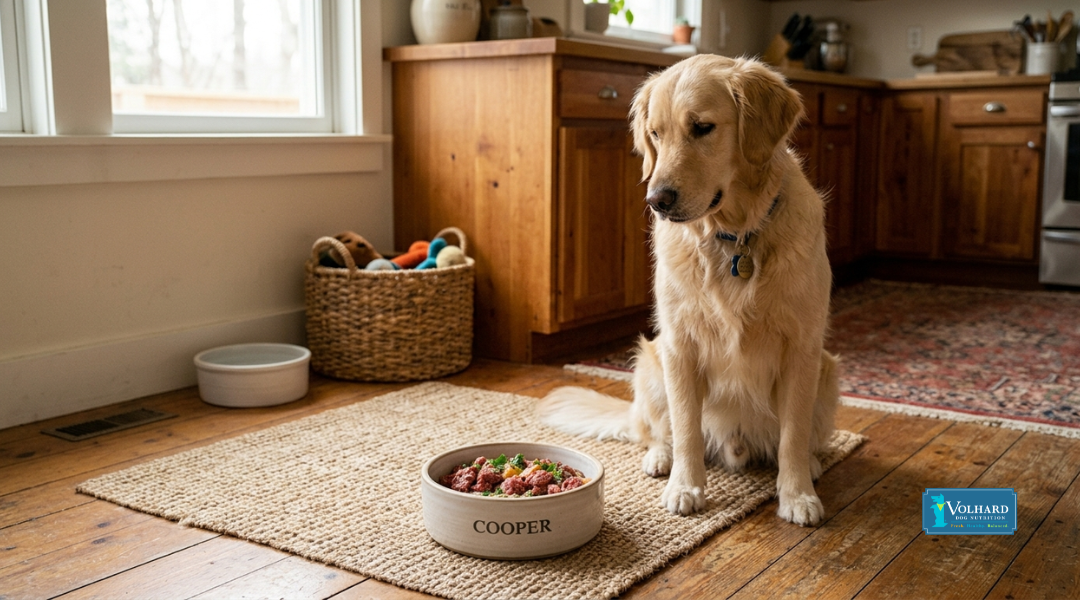
Fresh Diets Should Focus on Whole Foods
A healthy diet is built around complete, nutrient-rich ingredients rather than occasional treats.
Whole foods provide far greater nutritional value and make it easier to maintain a balanced diet over time.
Building a Balanced Meal Instead of Adding Table Scraps
When seeking to share some of your breakfast with your dog, consider passing on the bacon. An egg that is boiled or unseasoned scrambled is a better choice to add to your canine companion's bowl.
Complete fresh feeding plans are designed to provide the right balance of protein, healthy fats, vitamins, and minerals without relying on processed human foods to fill nutritional gaps.
For example, Volhard Dog Nutrition's NDF2 is carefully formulated to work alongside fresh protein, creating balanced meals with safe sources of protein for your dog, not unhealthy table scraps.
By focusing on whole, high-quality ingredients instead of processed treats, you can help support your dog's long-term health and wellbeing.

Give Your Dog a Healthier Source of Protein!
For more advice on dog nutrition, health, and training, contact us and check out our other blogs, too!
Volhard Dog Nutrition and its expert canine nutrition coaches offer online consultations to help more dog parents discover why and how to feed their dogs the healthiest foods!
Speaking to a Volhard canine nutrition coach will help you understand the inseparable relationship between healthy food, a healthy body, and a healthy mind.
If you want to contact one of our Volhard canine nutrition coaches, you can do so by utilizing our Live Chat feature or scheduling a consultation.
References:
American Animal Hospital Association. 2021 AAHA Nutrition and Weight Management Guidelines for Dogs and Cats Executive Summary. AAHA, 4 Aug. 2021, https://www.aaha.org/trends-magazine/publications/nutritional-guidelines/.
Pet Poison Helpline. "Is Table Food Poisonous for Dogs?" Pet Poison Helpline, https://www.petpoisonhelpline.com/uncategorized/is-table-food-poisonous-for-dogs/.
PetMD. "Fats for Dogs." PetMD, https://www.petmd.com/dog/nutrition/fats-for-dogs.
World Small Animal Veterinary Association. Global Nutrition Guidelines. WSAVA, https://wsava.org/global-guidelines/global-nutrition-guidelines/