
What to Feed a Constipated Dog for Better Digestive Health
Posted by Volhard Dog Nutrition on Sep 3rd 2026
Constipation can leave your dog uncomfortable, restless, and noticeably out of character.
While an occasional change in bowel movements is not always a cause for concern, what your dog eats plays an important role in digestion.
So, what should you feed a constipated dog? From moisture-rich foods and appropriate sources of fiber to simple additions like pumpkin, certain dietary changes may help get things moving again.
Signs Your Dog May Be Constipated
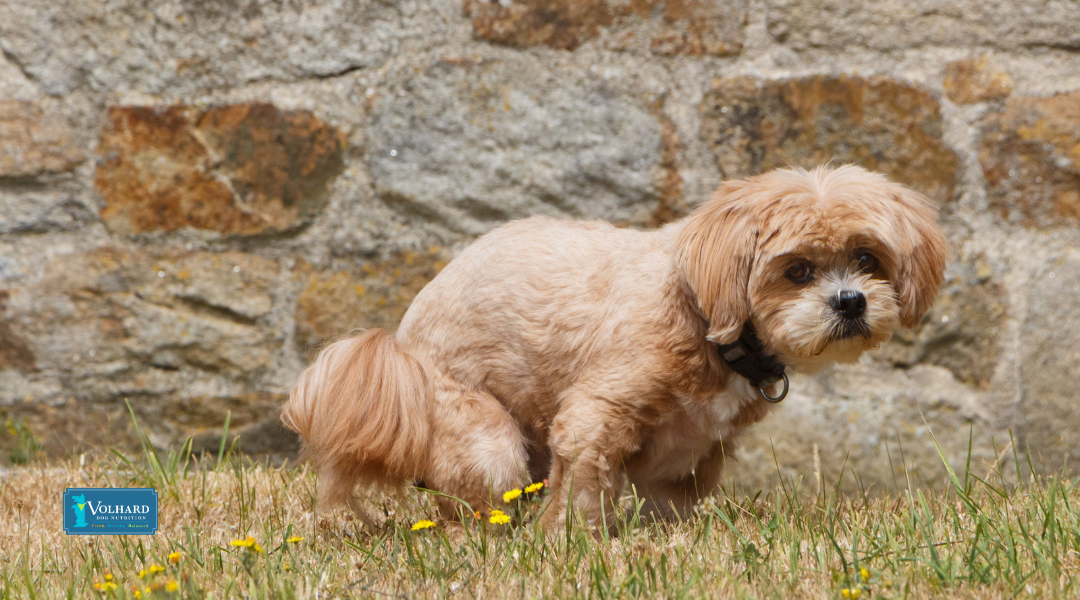
Most dogs have their own bathroom routine, so changes can be fairly easy to spot. A constipated dog may go longer than usual without a bowel movement or repeatedly try to poop without producing much stool.
Common signs of constipation in dogs include:
- Straining or taking longer than usual to poop
- Passing small, hard, or dry stools
- Producing very little stool at a time
- Going longer than normal between bowel movements
- Circling or squatting repeatedly without passing stool
- Showing discomfort when trying to poop
- A reduced appetite or lower energy in some dogs
A noticeable change in their usual habits can tell you more than frequency alone.
What Causes Constipation in Dogs?
Constipation happens when stool moves too slowly through the digestive tract. As it sits in the colon, the body absorbs more water from the stool, making it harder, drier, and more difficult to pass.
Diet can contribute to constipation, but it is not the only possible cause. Hydration, exercise, age, medications, swallowed materials, and certain health conditions can all affect how easily your dog passes stool.
Understanding the cause is important before deciding which dog constipation remedies are appropriate.
Common Dietary Causes of Dog Constipation
What goes into your dog's bowl directly affects what comes out. A diet that does not provide the right balance of moisture and fiber may contribute to harder, less frequent stools.
Diet-related factors may include:
- Not getting enough appropriate fiber
- Eating a diet with very little moisture
- Suddenly switching foods
- Eating excessive bones or other difficult-to-digest materials
- Consuming too much fiber without enough water
- Eating non-food items that cannot be properly digested
The right approach depends on your dog's usual diet, hydration, health, and the reason they are having trouble passing stool.
Dehydration and Its Impact on Digestion
Water is an important part of healthy digestion. When a dog is not adequately hydrated, the colon can absorb more water from the stool, leaving it dry and difficult to pass.
Encouraging hydration can therefore be an important part of a dog's constipation diet. Providing constant access to fresh water and incorporating moisture into meals may help support softer, easier-to-pass stools.
Hydration becomes particularly important when increasing dietary fiber. Fiber interacts with water in the digestive tract, so simply adding more fiber without considering your dog's fluid intake may not have the desired effect.
Other Factors That Can Affect Your Dog’s Bowel Movements
Less active dogs may experience changes in bowel regularity, and stress or disruptions to their normal routine can also affect bathroom habits.
Other potential contributors include:
- Changes in routine or environment
- Certain medications
- Swallowing hair, grass, toys, fabric, or other materials
- Age-related changes
- Problems involving the digestive tract or surrounding structures
If your dog repeatedly strains without producing stool, seems in pain, vomits, becomes lethargic, stops eating, or has persistent constipation, contact your holistic veterinarian.
Best Dog Food for Constipation: What Should You Look For?
When choosing the best dog food for constipation, look beyond a single ingredient. Healthy digestion depends on the overall balance of the diet, including appropriate fiber, adequate moisture, quality protein, and nutrients that support the gut.
The goal is not simply to make your dog poop more often. A good diet should help support comfortable, regular bowel movements while providing complete nutrition for everyday health. If constipation is occasional and diet-related, small adjustments to what your dog eats may make a noticeable difference.
Dog Food for Constipation: Key Nutritional Considerations
A dog food for constipation should support the digestive system without overwhelming it. More fiber is not automatically better, particularly if your dog is not drinking enough water.
When evaluating your dog's diet, consider:
- Fiber: Appropriate amounts can help add bulk to stool and support regular movement through the digestive tract.
- Moisture: Water helps keep stool from becoming excessively dry and hard.
- Digestibility: Ingredients your dog can digest efficiently may help support more predictable bowel movements.
- Balanced nutrition: Any long-term dietary changes should still provide the nutrients your dog needs for overall health.
- Consistency: Sudden changes in food can upset digestion, so transition to a new diet gradually when possible.
For dogs eating a fresh or natural diet, additions such as Volhard Dog Nutrition’s Veggie Pak can provide a convenient way to incorporate plant-based ingredients into a balanced feeding routine.
Dog-Safe Vegetables and Sources of Fiber
Fiber can support healthy stool formation and movement through the digestive system. Depending on your dog's regular diet, dog-safe vegetables and other whole-food sources of fiber can be useful additions.
Options may include:
- Plain pumpkin
- Green beans
- Carrots
- Zucchini
- Sweet potato in moderation
- Leafy greens prepared appropriately for dogs
Animal-derived fiber can also be part of a dog's diet. Dr. Conor Brady has discussed the role of animal fiber, including fur and other indigestible animal tissues, in supporting digestion. These components can provide a different type of dietary bulk than plant fiber and may support healthy digestion and stool formation when included in an appropriately balanced diet.
Pumpkin for dog constipation is particularly popular because it contains fiber and moisture. Plain pumpkin can be incorporated into some dogs' diets, but portion size matters. Too much fiber can have the opposite effect and may contribute to digestive discomfort or changes in stool consistency.
Moisture-Rich Foods for Better Hydration
If you are considering foods for constipated dogs, moisture deserves just as much attention as fiber. Water helps stool remain softer as it travels through the digestive tract.
Ways to increase moisture may include adding water to meals, feeding appropriately prepared fresh foods, or rehydrating dehydrated foods according to their feeding instructions.
Fresh drinking water should also always be readily available, regardless of the type of food your dog eats.
Can Probiotics Help With Dog Constipation?
Probiotics are beneficial microorganisms that can help support a balanced gut microbiome. Because the gut microbiome plays a role in digestive function, probiotics may be useful as part of a broader approach to digestive health for some dogs.
However, probiotics should not be treated as a quick fix for constipation. Their usefulness depends on your dog's diet, digestive health, and the underlying reason for the change in bowel movements.
Persistent digestive changes may need further investigation rather than simply adding another product to your dog's diet.
Home Remedies for Dog Constipation
You can consider:
- Increasing access to fresh water
- Adding appropriate moisture to meals
- Including a suitable source of dietary fiber
- Taking your dog for regular walks and encouraging gentle movement
Avoid giving your dog human laxatives, enemas, mineral oil, or medications unless your veterinarian specifically instructs you to.
Foods to Avoid When Your Dog Is Constipated
When your dog is having difficulty passing stool, adding more and more foods to their bowl is not necessarily the answer. Some foods and feeding practices may make digestive problems worse.
Be cautious with:
- Excessive amounts of fiber: Too much can cause digestive upset and may worsen constipation, particularly without adequate hydration.
- Cooked bones: These can create serious digestive complications.
- Highly processed human foods: Fatty, salty, or heavily seasoned foods are not appropriate remedies for dog constipation.
- Dairy products: Some dogs do not tolerate dairy well, which can create additional digestive problems.
- Sudden diet changes: Switching foods abruptly can disrupt digestion and make it harder to determine what is causing the problem.
Focus on restoring a healthy digestive rhythm rather than finding one food that acts as a quick fix. A balanced diet with appropriate fiber, fresh ingredients, sufficient moisture, and regular activity can help support digestive health over the long term.
Support Your Dog’s Digestive Health With Better Nutrition!
For more advice on dog nutrition, health, and training, contact us and check out our other blogs, too!
Volhard Dog Nutrition and its expert canine nutrition coaches offer online consultations to help more dog parents discover why and how to feed their dogs the healthiest foods!
Speaking to a Volhard canine nutrition coach will help you understand the inseparable relationship between healthy food, a healthy body, and a healthy mind.
If you want to contact one of our Volhard canine nutrition coaches, you can do so by utilizing our Live Chat feature or scheduling a consultation.
Resources:
Resources
Barnes, Courtney, Malcolm Weir, and Ernest Ward. “Constipation in Dogs.” VCA Animal Hospitals, 30 July 2025. VCA Animal Hospitals – Constipation in Dogs.
Kleszynski, Brittany. “Dog Constipation: Treatment and When To Call Your Vet.” PetMD, 27 Sept. 2024. PetMD – Dog Constipation.
“Disorders of the Stomach and Intestines in Dogs.” Merck Veterinary Manual, Merck & Co., 2026. Merck Veterinary Manual – Digestive Disorders in Dogs.
Boyers, Lindsay. “Can Dogs Eat Pumpkin? Benefits, Risks, and Feeding Tips.” PetMD, 2025. PetMD – Can Dogs Eat Pumpkin?.
American Kennel Club. “Can Dogs Eat Bones? Be Careful Before Giving Your Pup a Bone.” American Kennel Club. AKC – Can Dogs Eat Bones?.
Schmitz, Silke, and Jan S. Suchodolski. “Understanding the Canine Intestinal Microbiota and Its Modification by Pro-, Pre- and Synbiotics: What Is the Evidence?” Veterinary Medicine and Science, vol. 2, no. 2, 2016, pp. 71–94. PubMed. PubMed – Canine Intestinal Microbiota and Probiotics.
Wilson, Sofia M., and Kelly S. Swanson. “The Influence of ‘Biotics’ on the Gut Microbiome of Dogs and Cats.” Veterinary Record, vol. 195, suppl. 2, 2024, pp. 2–12. PubMed, doi:10.1002/vetr.4914. PubMed – Biotics and the Gut Microbiome of Dogs and Cats